


| Molecular Manufacturing |
| WALL-E In Theatres Now! |
| Four companies launch |
| Terence McKenna on Transh |
| IBM's Roadrunner smashes |
| can users add robots to t |
| Yes yes yes, I know you'r |
| I love robots and all, bu |
| Cyborg Ascension |
| Where is your God? |
![]() |
Posted July 24th 2008 11:27AM |
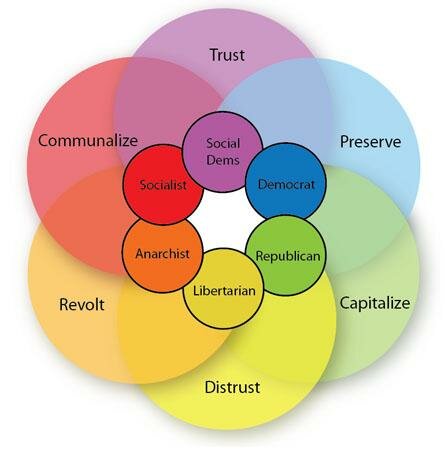
With the 2008 US Presidential election just around the corner it's a good time to do a little brushing up on political ideologies. Here in the US there are currently only two major political parties and regardless of how you feel towards them it is important to understand not only what those parties believe, but also why they believe it. In this video George Lakoff, professor of cognitive linguistics at UC Berkeley, explains the sort of mental framing that allows liberals and conservatives to rationalize there often seemingly contradictory political beliefs. |
![]() |
Posted July 19th 2008 10:16AM |
Physicist Freeman Dyson suggests that we start looking for life on the moons of Jupiter and out past Neptune, in the Kuiper belt and the Oort cloud. He talks about what such life would be like -- and how we might find it. He also raises some interesting points about bio-engineering new life forms and the possibility that even if there is no other life in our solar system we might be able to design something capable of surviving out there ourselves. |
![]() |
Posted July 14th 2008 1:31PM |
In this TED Talks Presentation Clay Shirky shows how building systems that facilitate open collaboration generate tremendous productivity, often times for free. He explains how the Internet is changing the way people work together and how this trend may impact the way business is run, value is assessed, and our rights are interpreted. The presentation seems very light but the information within it and the topics it addresses are very deep and extremely important. |
![]() |
Posted July 10th 2008 6:36PM |
This video reviews the latest theories and applications of nanotechnology, including Molecular Assembly and Molecular Fabrication with Nanotechnology. The molecular machines in our cells within our bodies are atomically precise - two copies of the same protein are the same - atom-for-atom - because they are built by a series of controlled chemical reactions. Similarly, in a nanomachine conducting molecular manufacturing - the process of building a part will consist of a sequence of chemical reactions that produce an atomically precise product. Robot arms will be used to put molecules together in such a way that only the desired reaction can happen. This precision will result in a machine part that is - just like the cells within our bodies - atom-for-atom. |
![]() |
Posted July 5th 2008 5:04PM |
If you're anywhere near Pittsburgh and you have an interest in robots, you should definitely consider going to Robot 250. This event, part of the celebration of Pittsburgh's 250th anniversary, is Carnegie Mellon University's attempt at promoting robotics among the general public. Events include giant robots, exhibits, and robot-building activities. Source: Robots.net |
![]() |
Posted July 1st 2008 11:41AM |
![]() Popular Science magazine has done an interesting article on the cities of the future. In it they present ten visionary ideas that could change the way cities are built, our lives are lived, and the impact humanity has on the environment around us. Source - Popsci - Podcast |
![]() |
Posted June 27th 2008 4:21PM |
Watch multiple ASIMOs serving the very first FCX Clarity customers at Honda's Head Office in Aoyama, Tokyo. American Honda Motor Co., Inc., recently announced five of the first customers for its advanced new FCX Clarity hydrogen fuel cell-powered vehicle and also provided details of the world's first fuel cell vehicle dealership network in the United States. The announcements were made during a ceremony for the start of FCX Clarity production at the world's first dedicated fuel cell vehicle manufacturing facility in Japan on June 16, 2008. Film producer Ron Yerxa will take delivery of the first FCX Clarity in July. The remaining four early adopters for Honda's next-generation fuel cell vehicle are author and actress Jamie Lee Curtis and her filmmaker husband Christopher Guest; business owner and car enthusiast Jim Salomon; actress Laura Harris; and Jon Spallino, already the world's first retail fuel cell vehicle customer, who has been leasing the current generation FCX since 2005. Yerxa, Harris and Spallino attended the event in Japan. |
![]() |
Posted June 27th 2008 1:50AM |
![]() |
Posted June 24th 2008 10:24AM |
On Saturday June 7th 2008, in Gamagori Aichi Prefecture, Souya Takagi (director of Toyota's Partner Robot program) gave a thorough presentation outlining Toyota's vision for the future of robotics. Toyota has been engaged in developing Partner Robots since 2001, having shown off robots capable of playing the trumpet and violin as well as mobile walking robots at the Aichi expo in 2005. Since the expo, Toyota is more focused on developing practical Partner Robots. During the 2005 Aichi World Expo, Toyota debuted "Concero", a robot band consisting of seven instruments as well as the i-foot walking chair. The band played approximately 15 times a day for 185 consecutive days, for a total of 2555 performances. The Partner Robots were cycled every hour to let drained units charge, but with attendees waiting 4 to 5 hours to see Toyota's show, there wasn't time to perform other maintenance duties. You could say that this grueling schedule was comparable to the testing used on car production lines. Toyota has long cultivated the notion of a production line which ensures reliability. Typically, the failure rate for industrial products follows what is called the "bath tub curve", wherein the vertical axis is the failure rate and the horizontal axis represents time. Failure rates are high during the initial bug-fixing stages before evening out during the product's life-cycle, before sharply rising once again due to unforeseen problems (such as accidents) or simply age. They found that the Partner Robots exhibited a similar curve during the expo. On the future direction of Partner Robots, Takagi pointed out the aging population and slow population growth as significant driving factors for developing practical robots used in daily life. By 2055 it is estimated that Japan's total population will be nearly half of what it is today. As energy and environmental resources grow scarce around the world, Toyota aims to find solutions to problems such as energy storage, new energy, IT, and RT (robotics technology) will also play a role. An aging population means a reduction in the workforce, and the skills and knowledge that take years to develop. Given an environment where robots do the heavy lifting of senior staff, everyone will benefit from their production skills and knowledge. An aging population also means a decline in strength and maneuverability, so youthful activities will need to be supported with new mobility options. Men and women must also be relieved of some household duties that would otherwise slow them down. These needs present a diverse challenge that conventional machines often cannot address. Slides showing robots at work in production lines, in the workforce, at home and abroad, and in hospitals, demonstrated all of the areas where Toyota intends to move forward. Toyota has already developed robots which can precisely play instruments such as the trumpet and violin, as well as mobility platforms that can tackle uneven terrain. The natural evolution of these technologies will be robots that are capable of more practical use, such as "service dog robots" that can autonomously navigate a household performing duties for those in need of nursing care, and robots that can operate tools. However, Takagi admits that RT is very complex and that Toyota cannot do the job alone. Collaborations with universities and businesses are very important, in particular Tokyo University and Nissan. Future research and development with different robots will begin soon, with trials beginning as early as 2008 for robots in the field of medical care/support. Sometime in the years 201X, Toyota expects Partner Robots to facilitate work around the home and office, serving alongside their human counterparts. (roughly translated from Impress Robot Watch, where you can view the many slides shown) |
![]() |
Posted June 22nd 2008 9:40PM |
Japanese companies TMSUK Co. Ltd., Vstone, ZMP, and Business Design Laboratory have announced a joint venture aimed at spreading the use of domestic robots. The first 10 years of the 21st century are almost over, and yet widespread use of domestic robots is not yet a reality. While robots have been put to practical use in factories, there is still a huge market in waiting for robots, for example as home appliances. One of the difficulties facing this expansion of home robotics is price. Its difficult to sell products at a high price and if the product is a failure companies face a swift downward spiral. Of course, price is only one factor but these four companies plan to work together to reduce costs, which should lead to higher volume sales while achieving the aims of the federation. Up until now each company has been focused on marketing their own products and brand, but there is only so much they can do. But in the future, following the establishment of the federation, we can expect the following: 1. Robotic product development, sales, customer service, etc will benefit from the combined expertise of each company 2. Marketing, social, educational, and promotional events can be made on a larger scale due to their combined efforts 3. Each company is headquartered in major districts such as Tokyo, Osaka, and Fukuoka; besides the contribution to the local economy, these areas will strengthen business networks across Japan 4. The federation will empower the companies to compete against foreign robotics companies TMSUK's CEO and federation chairman remarked that, "Sales are very difficult. TMSUK robots tend to be ignored on the fringes of a department store. But with more robots to buy (or not to buy) out there, whether its Miuro (ZMP), Ifbot (BDL), or Vstone robots, the more options the more public awareness will increase. If it makes the industry even a little bit better, I believe we've succeeded." The federation was formed as a direct response to the South Korean government's broad vision for their robotic industry, which they claim will produce a robot for every household by 2020. South Korea also plans to build up to three robot-themed amusement parks in the future. Additionally, it is believed that this free exchange of information and cooperation in marketing will revolve around a new, jointly developed product. Specifics weren't provided, but the chairman did say that his remote-controlled robots can communicate with mobile phones. Sharing this technology would allow all robots in the federation to be controlled this way, and that combining each member's specialty can only be a good thing. (roughly translated from Impress Robot Watch) |